One Dream for Mobility Communication: Prioritizing Driver and Cyclist Safety
February 03, 2026 By Lori Straus
February 03, 2026 By Lori Straus
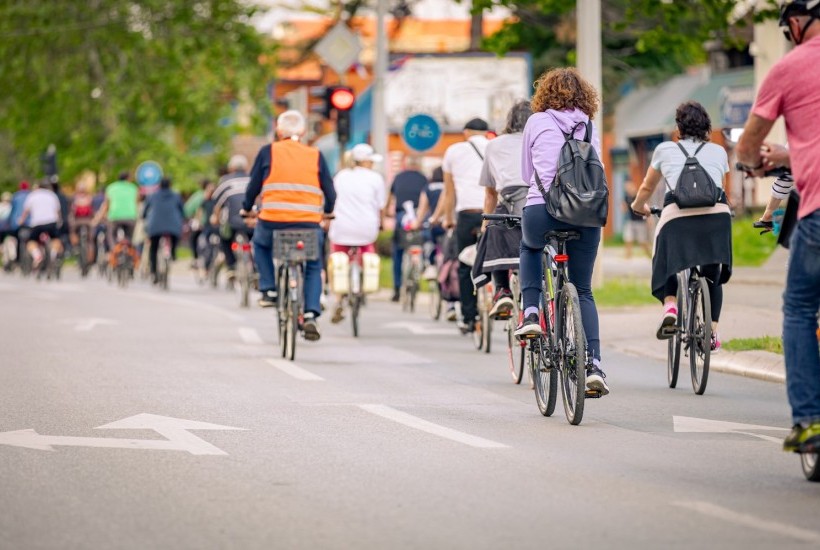
Across Canada, a growing number of municipalities are prioritizing high-quality cycling infrastructure. In fact, between 2022 and 2024, nearly 3,600 km of cycling-friendly laneways were added, with the largest increases taking place in small to mid-sized cities.
As an avid cyclist myself, this is great news. There’s nothing more frustrating than hugging the crumbling shoulder of a packed roadway.
But why the push for more cycling infrastructure? Among initiatives to boost public health and to reduce environmental impact, protecting cyclist safety is consistently cited as a key reason. Clearly marked bike-specific lanes reduce the risk of crashes anywhere from 30 to 90% compared to roads that are shared with vehicles.
And yet, motorists and cyclists act as though they’re on separate teams.
As a communications expert, I can’t help but wonder: what needs to be done to promote positive sentiment to shared roadways, as well as advocate for both motorist and cyclist well-being?
We already have the tools. So, let’s walk through them. (No pun intended, of course.)
Public campaigns around right-of-way rules and how to safely share roadways tend to default to drivers. While important, this is ignoring a large portion of the core audience: cyclists.
Both parties need tailored messaging and channels.
Communications for drivers can include reminders to check for bike lanes and cyclists before they turn.
Cyclists can benefit from messaging that focuses on the kinds of bike lanes available in your community, how to safely and legally ride on the road, and on the dangers (and illegality) of weaving in and out of traffic or onto and off sidewalks.
For organizations communicating nationally, ensure your messaging reflects local laws as much as possible.
Drivers and cyclists share the road. Create messaging that speaks to both groups.
All too often, safety communication tends to come as a reactive response to an unfortunate accident. Proactive communication is vital. A few ideas:
One local account we follow is Grand River Transit on Instagram (@grt_row). Their account mixes transit and customer service updates with fun videos targeting user behaviour and highlighting local events.
Catchy, simple, fun.
Most drivers learn how to drive around cyclists in driver’s education and then never hear the messaging again.
Cyclists, on the other hand, may at most learn how to ride their bike on the road in primary school.
Mobility literacy needs to be embedded in print and online driving school resources across multiple stages, with ongoing public refresher campaigns. Recurring educational campaigns will continue to drive the message home that roads are shareable, so long as everyone abides by the rules.
Shared space needs to be framed as a community asset, not a detriment to others who felt they were there “first.” Road rules feel harsh, black-and-white, and devoid of emotion. Campaigns to protect the health and safety of others benefit from focusing on people.
A humanized campaign can draw people in by celebrating positive behaviour and explaining the real-life consequences of ignoring rules and laws. Strong community voices can help broadcast these messages even further.
Think about MADD campaigns. This grassroots organization is an example of consistent awareness campaigns combined with community work to bring about change.
They use strong human-interest angles to highlight the physical and emotional turmoil that results from drunk and distracted driving. The consequences are clear, and it’s impossible not to empathize.
The results? MADD has been responsible for hundreds of changes to drinking-and-driving laws in Canada and the US. Working in partnership with the RCMP, they improve their reach with long-lasting effects.
Many laws for motorists and cyclists already exist. Improved communication that speaks to both groups is the next step.
We know where the greatest dangers lie for cyclists and drivers. Blind spots when turning right, safely opening vehicle doors while parked on a busy roadway, and navigating hectic school zones are all examples of spaces where drivers and cyclists face the confusing “whose right was it, anyway?” scenario.
Situation-specific campaigns create precise messaging and ensure everyone is prepared before concerns arise.
Beyond collecting data on how many people heard or saw the message, behavioural goals must be set. For example, does it matter how far the campaign reached if no one engages with it?
Once data is finalized, it’s time to share the findings across cities and regions, so we can all learn, strategize, and continue to create safe roadways for all forms of mobility.
Change can be hard. Far too often, we see a mentality of “us vs. them” among cyclists and motorists. But if we’re going to achieve collaboration, mobility communication needs to target this divide and work toward erasing it.
Green initiatives, growing health movements, and ongoing economic uncertainty will continue to change how we travel. Shared roadways are the future, and a courtesy-driven road culture makes them work. Let’s support this change with communication that fosters it.
Need support developing and launching effective mobility messaging? Fill out the contact form in our footer. We would love to help you create a more collaborative mobility culture.